
Is Iran Licking Its Wounds Or Sharpening Its Claws?
- 25.07.2025, 15:28
- 3,522
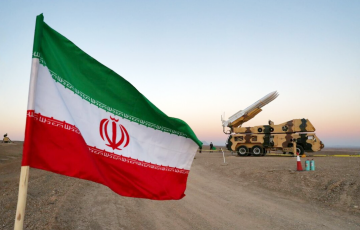
What's happening in the country after Rising Lion.
A month has passed since the end of the Iran-Israel standoff, which, with the light hand of the American president, has a chance to go down in history as a 12-day war. Analysts, having failed to reach a clear opinion on the extent of damage inflicted on the Islamic Republic's nuclear program by the Israeli and American strikes, are turning to attempts to imagine how the situation will develop further. Is it possible to hope that the apogee of geopolitical confrontation has passed and the specter of nuclear apocalypse is dispelled before it can materialize? Or is what happened just one of the episodes in a brutal scenario, where each subsequent action is more brutal than the previous one?
To talk about the situation in terms of forecasts is a highly thankless task. It is realistic, though not easy, to try to model possible scenarios, roughly estimating the degree of their probability. Statements and comments coming from Washington and Tehran do not make it clear what line of behavior the two capitals have chosen. Perhaps the main difficulty lies in the fact that the parties themselves have not yet made up their minds. First of all, this is about Tehran - the conditional "ball" is now on its side of the field. It seems that Tehran is still oscillating between the options of "show maximum concession" and "go for a higher degree of escalation". But let's try to consider the possible future behavior of the players in order.
Let's start with the simplest. Tel Aviv has never taken negotiations with Iran seriously. From the point of view of the Jewish government, any agreement for the ayatollah regime is just a ploy to buy time and focus resources on its strategic goal of producing nuclear weapons. Perhaps a complete curtailment of the nuclear program, especially the renunciation of uranium enrichment, could be an acceptable result of diplomatic efforts accompanied by economic and military pressure, provided that an effective control mechanism is established. Now, however, Israel is no longer dependent on diplomacy and feels able, if necessary, to put an end to any Iranian attempts to return to developing nuclear weapons on its own. Not so long ago, even a year ago, the situation was different. Hovering over the northern border was Hezbollah, which had considerable capability in defeating Israeli territory. For decades, the threat of these Shiite radicals, controlled by the Ayatollah regime, had been the latter's fail-safe "insurance" against any Israeli action. A Democratic administration sat in the White House and worked hard to contain Tel Aviv on both the Lebanese and Iranian tracks.
Since then, Hezbollah has suffered a crushing defeat and is virtually out of the game. (According to Israeli intelligence claims, which look pretty convincing to me, it was then that Tehran decided to attempt a breakout in its military nuclear program to secure the regime, as the previously established deterrent threat system of terrorist proxy forces had ceased to serve that function.) In Syria, the pro-Iranian regime was brought down. Israel diligently manhandled whatever was left of the Assad army's air defenses, thereby clearing the way for its planes closer to the Iranian border. The Islamic Republic's own air defenses also took a beating last October as a limited response to a second Iranian bombardment of Israeli territory. By the way, both exchanges of strikes last year, in spring and fall, were initiated by Tehran itself, which makes the indignation of pro-Iranian propagandists about "Zionist aggression" less convincing. Finally, a politician who calls himself the most pro-Israel president in American history has settled in the Oval Office, and the first thing he did was to unblock deliveries to Tel Aviv of heavy bombs blocked by his predecessor. Israeli Prime Minister Binyamin Netanyahu showed considerable tact and patience, waiting until Donald Trump had accumulated enough irritation over the rather obvious attempts of Iranian diplomats to mask their unwillingness to change anything with florid language. Despite the complexities of the two leaders' relationship, they have managed to reach a mutual understanding on the Iranian issue.
Now Israel will not hesitate to crack down forcefully on any attempt by Tehran to restart its program. Arguing about how many months or years backward the June bombing set it back makes no sense. Having been given full freedom of action in Iranian skies as a result of the war, the Israel Defense Forces air force will make sure that it is stopped for good. Despite the severe damage and casualties from Iranian shelling, Operation Rising Lion received full support from Israeli society. For Israel, the only downside to the outcome of the war (and in the case of repeated strikes) may be only the condemnation of part of the international community. But the image of the Jewish state is still primarily determined by the war in Gaza, so a couple more statements condemning Iran's "violation of sovereignty" are ready to be postponed in Tel Aviv.
A more complicated issue is Donald Trump's current position. In the month since the US strike on Iranian nuclear facilities, the president has made several contradictory statements. He announced the continuation of negotiations and denied his own words, claimed that Iran would no longer bully and threatened new strikes if uranium enrichment resumed. Donald Trump seems to have been sincere when he said that he was no longer interested in continuing negotiations. Indeed, it is not at all clear what sense America can make of them now? The main subject of the hypothetical negotiations is buried tens of meters deep in the rock. What to discuss?
For Iran, in fact, the five rounds of negotiations that took place in the spring were primarily an attempt to stall for time and avoid what happened a month ago. True, unlike the White House, the ayatollah regime has good reason to try to pretend that halting the nuclear program is not the result of catastrophic damage from Israeli-American strikes, but may be a "goodwill gesture" by Tehran itself. In an attempt to bargain for the lifting of sanctions, it would be reasonable for Iran to try to present the situation that has already developed under the influence of external interference as its own conscious choice. The leadership of the Islamic Republic is pushed to do so not only by the realization of complete helplessness in the face of a possible continuation of the armed confrontation, but also by the dire state of the economy.
The standard of living of the population is falling rapidly. Prices for the most basic products are rising. Bread has become one and a half times more expensive in recent weeks. The authorities are forced to gradually withdraw from the system of subsidies, for example, for gasoline. This is already threatening social tension. The energy crisis continues in the country. Power cuts have become the norm amid the incredible heat wave. Water shortages have predictably added to this. Residents of Tehran and other cities are being urged to reduce consumption, but this will not help without a major overhaul of infrastructure. Declining rainfall and critically falling water levels in reservoirs is a steady trend and it is not hard to foresee the situation worsening.
With this background, the peace-loving statements of the Islamic Republic's President Masoud Pezeshkian in an interview with American showman Tucker Carlson become understandable. Despite the US involvement in the destruction of Iran's nuclear infrastructure, the politician demonstrated simply amazing constructiveness. For this, by the way, he was immediately criticized harshly - up to and including calls for impeachment - by the intransigent "hawks".
In the Iranian political elite before there were different factions, the polemics between which were sometimes very sharp, but after the war, the lack of consensus in the leadership of the Islamic Republic became especially obvious. The constructive wing, epitomized by the president and the foreign minister, would prefer to show the West accommodation. Lifting sanctions could bring relief to the Iranian economy and perhaps allow the regime to survive.
But publicly refusing to enrich uranium on its own would look like capitulation in the eyes of part of society and the elite. It would be psychologically difficult for the leadership of the Islamic Republic to do such a thing after all the victory speeches and loud threats they have so generously thrown around. It would not only be a humiliation, but also a show of weakness - a luxury that an already shaken regime cannot afford.
It seems that the Supreme Leader of the Islamic Republic Ali Khamenei has not yet decided on the way forward. Besides the rational but humiliating option of "surrender," the option of "attempted revenge" apparently lies on his desk. Not being an expert in nuclear physics, I will not venture to say how true are the calculations about the possibility of making a bomb from uranium enriched to 60%, the stockpile of which can probably still be retrieved from underground factories. This option does not seem very realistic to me. However, in any case, the question is not whether Iran is technically capable of returning to work on the bomb, but whether it is politically ready to do so.
It is obvious that all the statements about the restoration of the air defense system and impressive missile tests are bluffs designed to inspire the population and, if possible, to intimidate the international community. The statements about the termination of cooperation with the IAEA and threats to withdraw from the Treaty on the Non-Proliferation of Nuclear Weapons are also purely propaganda. Iran is trying to intimidate the international community by saying that now, after the terrible offense inflicted by the Zionist aggressors and American imperialists, it will be forced to "start for real". Perhaps Tehran is still hoping to "sell" to the international community the willingness to refrain from really radical demonstrative steps as a constructive position. However, this bluff may also have devastating consequences for the Islamic Republic. And it is not only about new Israeli strikes.
While the ayatollah regime would ideally like to see U.S. sanctions lifted, the return of the more sweeping and binding UN Security Council sanctions in full is taking on realistic shape. Ten years ago, when the Joint Comprehensive Plan of Action on Iran's nuclear program was negotiated, its authors envisioned a snapback mechanism, i.e., the return of sanctions in the event of violations. Any of the countries that participated in the agreement can apply to the Security Council to initiate the process. Its peculiarity is its automatic nature. Only a decision of the Security Council, which would leave the suspension of sanctions in force, can stop the process within a month after the application. Given the composition of the permanent members of the Security Council with the right of veto, it is obvious that such a decision will be impossible. No additional vote is needed to return the sanctions.
The so-called Euro-troika - Britain, France and Germany - has already announced its intention to initiate a snapback procedure if no progress is made in negotiations over Iran's nuclear program by the end of August. Since no one is actually negotiating at the moment, it is obvious that this ultimatum should be interpreted as a demand from Tehran to declare a refusal at least to enrich uranium above the level stipulated by the decade-old deal. The Iranian representative is due to hold talks this week with the Eurotroika, where the demands on the Islamic republic should take concrete shape.
The return of Security Council sanctions will be difficult for the ayatollahs' few remaining partners to ignore, including China, which is the main buyer of Iranian oil. A variety of smuggling schemes will, of course, allow exports to continue, but they will obviously decrease, presumably by half, according to experts' calculations. This may also affect the world oil price, especially if increased confrontation with the West leads to the return of the threat of Iran blocking the Strait of Hormuz.
Ukraine, like, in fact, the whole world, including the Iranian people, is interested in defusing the situation in the Middle East. But now the decision on the further development of events is made in Tehran by a man whose rationality and adequate connection with reality there are reasons to doubt. So far he seems to be hesitating, but the experience of recent months clearly shows that he should not delay too much.
Vyacheslav Likhachev, "Zerkalo Nedeli"

Bank's name: Bank Millennium S.A.
Address: ul. Stanislawa Zaryna, 2A, 02-593, Warszawa
IBAN: PL97116022020000000216711123
SWIFT: BIGBPLPW
Name of the account holder: Fundacja “KARTA ‘97”
Purpose/title of payment: Donation for statuary aims
You can contact us by the e-mail [email protected]