
Hurried Old Men
1- 24.07.2025, 11:46
- 5,222
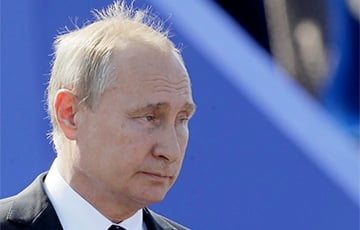
Several rulers are in a hurry to go "into eternity."
Europe, not America, is the main exception to this rule. In a world of nation-states, it has the supranational European Union. In a world that is gradually realizing the intractability of violence, Europe continues to believe that it is a thing of the past. (Hence the hasty, somewhat shameful rearmament campaign.) In a world predominantly ruled by elderly leaders, people like 47-year-old French President Emmanuel Macron or 48-year-old Italian Prime Minister Giorgia Meloni look more like prodigies.
The numbers should stun us.
Donald Trump, Xi Jinping, Narendra Modi and Vladimir Putin are all over 70. Over 70 are Recep Tayyip Erdogan (president of Turkey), Binyamin Netanyahu (prime minister of Israel), Siril Ramaphosa (president of South Africa) and Lula da Silva (president of Brazil). The president and supreme leader of Iran are 70 and 86 years old, respectively. The presidents of Nigeria and Indonesia are 73 each. More than half of the world's population and much of its territory and military potential are in the hands of people who are older than Ronald Reagan was when he entered the White House (and he was 69 at the time - which was considered risky).
One of the important destabilizing factors in the world today is the age of its leaders.
Old leaders are eager to leave something behind, to achieve something great, before their own lifespan is up. The annexation of Taiwan to mainland China is a prime example of such a project. No less vivid is revenge for Russia's loss of prestige and "strategic role" after the Cold War. Even Trump's haste to resolve the Ukrainian conflict (even to the detriment of Ukraine) and his desire to destroy the former global trade at any cost is also a consequence of the old man's anxiety, in a hurry to make a point.
The problem is not health - almost all of these leaders are alert and sane. The problem is their motivation: they have little time for great achievements, and they will not have to pay for their mistakes - in the form of a court verdict or loss of reputation.
There is a paradox here: old age should seem to be the reason for attentiveness and caution - but it becomes the reason for excitement. This is true for leaders and voters alike. Who would have thought that as the average age rises, Western voters would become more anti-elitist? And it was older voters who gave the world Brexit and Trump.
But the focus should be on the leaders themselves.
Even if all those seventy-year-old rulers behaved with restraint, a change of power after a long reign is itself fraught with crises. Democracies do have a procedure, after all (if Trump, for example, recognizes the 22nd Amendment to the constitution - it limits the presidency to two terms).
But what about Putin or Xi? There's the possibility of not just palace intrigue, but open protest, unthinkable at the peak of authoritarian stability. The Arab Spring happened in part because a whole generation of North African leaders, such as 80-year-old Hosni Mubarak, aged simultaneously. Imagine now several far more powerful countries where regimes cemented by decades of personal power will simultaneously begin to change.
And imagine how unpredictable what will replace them will be. Putin and Erdogan have been in control of their countries for almost the entire 21st century. Xi and Modi for more than a decade each. When Ali Khamenei became supreme leader of Iran, the Soviet Union still existed. Netanyahu and Lula are returnees in general. To some extent, all of these countries are products of leaders. Ask a Western diplomat: How will Russia behave after Putin? You'll hear a nifty guess - or see him shrug.
It's hard to recall another historical moment when so many leaders simultaneously entered old age. (If the word "old age" seems too harsh, remember that even in the world's most prosperous countries, life expectancy for men does not exceed 85.) Even on the eve of World War I, in the era of mustachioed old men sending boys into meat grinders, Kaiser Wilhelm II was just over 50.
Why did Europe, the oldest continent demographically, escape the power of old men?
Probably because Europe is an exception in other things, too. In countries that think in terms of power, rigid verticals and "family-nation", it is not surprising that "fathers of the people" rule. Where power is the technocratic management of a prosperous world, this is less true. Note: after Russia invaded Ukraine in 2022, both Britain and Germany chose unusually aged leaders. (Although neither Keir Starmer nor Friedrich Merz is yet 70.)
However, the world is experiencing a lesson in the paradoxical consequences of active old age. Age brings wisdom - but also liberation from fear. It obliges service - but also dictates haste. Of course, it would be more accurate to attribute the world's volatility to economic trends and historical processes. But perhaps one important reason is that a few old men are in a hurry to enter eternity, leaving behind a "remarkable legacy".
And if so, it will get worse every day.
Janan Ganesh, Financial Times, translated by The Moscow Times

Bank's name: Bank Millennium S.A.
Address: ul. Stanislawa Zaryna, 2A, 02-593, Warszawa
IBAN: PL97116022020000000216711123
SWIFT: BIGBPLPW
Name of the account holder: Fundacja “KARTA ‘97”
Purpose/title of payment: Donation for statuary aims
You can contact us by the e-mail [email protected]