


Die Welt: EU Countries Have Started An "invisible War" Against Russia
- 21.12.2025, 11:42
- 7,760
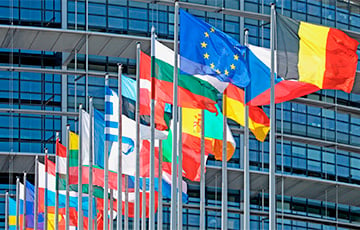
The West relies on covert operations.
Europe is increasingly using cyber tools to confront Russia, avoiding publicity and official statements. Western countries are betting on covert digital operations in response to hacker attacks linked to Moscow.
This strategy is called "invisible war" in Berlin. This is what Die Welt writes.
Few countries in the European Union already possess offensive cyber capabilities and use them covertly. According to the publication, Western governments are responding to cyberattacks attributed to Russia not with diplomatic demarches, but with covert strikes in the digital space.
The center of the material is the Estonian company CybExer, which specializes in both protecting against hacker attacks and carrying them out. Company spokesman Aare Reintam confirmed that CybExer provides offensive cyber tools to several EU countries at once. According to him, this is what modern warfare looks like today.
Welt journalists describe the company's office as a command post: on the screens are maps with infrastructure, from residential buildings to energy towers, which are marked according to their level of security or whether they have been hacked.
Reintam explains that strategic sites with high levels of protection do not have to be attacked to destabilize the system. Less visible elements, particularly water drainage systems, can be vulnerable. Due to the use of outdated 2G networks with weak encryption, an attack on water pumps could cause widespread consequences ranging from technical failures to health problems.
The publication notes that participation in such operations is officially denied by all parties. At the same time, Estonia, which Die Welt calls one of the leaders of cybersecurity in Europe, has its own bitter experience: in 2007, the country was subjected to a massive cyberattack on state resources and banks.
It was after this that the NATO Center of Excellence for Cyber Defense (CCDCOE) was established in Tallinn. It analyzes real cyber attacks and works out scenarios for future threats. According to Bundeswehr Lieutenant Colonel Christoph Kühn, one of the key areas of the center's work is training, because cyber warfare requires not only equipment but also trained specialists.
This year, the CCDCOE held two large-scale exercises - one focused on repelling cyber attacks and the other on offensive operations in the event of a serious escalation.

Bank's name: Bank Millennium S.A.
Address: ul. Stanislawa Zaryna, 2A, 02-593, Warszawa
IBAN: PL97116022020000000216711123
SWIFT: BIGBPLPW
Name of the account holder: Fundacja “KARTA ‘97”
Purpose/title of payment: Donation for statuary aims
You can contact us by the e-mail [email protected]