


In 2025, Data Center Investment Will Surpass Oil For The First Time
1- 12.11.2025, 19:59
- 1,762
International Energy Agency Forecast.
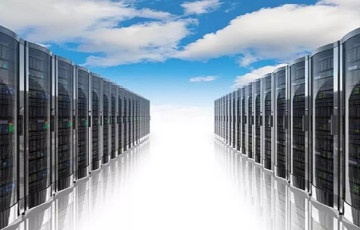
Technology companies around the world have been increasingly investing in new data centers (data centers) in recent years to train and develop various artificial intelligence (AI) models, the International Energy Agency (IEA) wrote in its annual World Energy Report. This trend has led to investments in data centers totaling about $580 billion as early as 2025, compared to about $540 billion for the oil industry.
This comparison clearly demonstrates the changing nature of today's highly digitalized economy and supports claims that "data is the new oil," the IEA states.
Thanks to the growth in data center capacity, electricity consumption by AI-optimized servers will quintuple by 2030, and total electricity demand from data centers will double. The IEA estimated in April that data center power consumption will double to 945 TWh by 2030 (slightly more than Japan's electricity demand) and to 1,200 TWh by 2035. Despite this rapid pace, data centers will account for less than 10% of the increase in global electricity demand between 2024 and 2030, but this growth will be highly concentrated geographically.
"Unlike the trend of the last decade, electricity consumption growth is no longer limited to emerging market and developing economies. The rapid growth in demand from data centers and artificial intelligence is contributing to the increase in electricity consumption in developed economies as well," the agency's analysts said.
At present, about 82% of the world's data center capacity is located in the United States, China and Europe. And in the next ten years, more than 85% of new capacity is expected to appear there. At the same time, data centers in China and the European Union will account for 6-10% of electricity demand growth by 2030, while in the U.S. (the world's largest data center market) - about 50%.
According to geospatial analysis, the IEA notes that more than half of the data center projects under construction or announced are located in cities with a population of at least 1 million people or near them, as the networks there are already designed for heavy loads. At the same time, more than 55% of data centers under construction have a capacity of more than 200 MW and, once fully operational, will consume as much electricity as 200,000 households annually. In addition, almost two-thirds of these future data centers are located in regions where computing clusters already exist.
Fast construction of data centers involves certain difficulties, the IEA emphasizes. First of all, it is connected with overloading of the power grid and queues for connection. Now in the US, the average waiting time in a grid connection queue is one to three years, and in Northern Virginia the process can take up to seven years. In the UK and parts of Europe, the average waiting time in the queue is as long as seven to ten years. In Dublin, applications for new data center connections are on hold until 2028, the IEA points out. Supply chains for key components such as transformers, cables, gas turbines and critical minerals are also under pressure. Because of these factors, about 20% of new data centers projected to be built by 2030 could face a risk of delay, according to the IEA analysis.
With regard to the sources of meeting electricity demand, most data centers are connected to the general power grid, so their consumption patterns reflect the energy consumption patterns of the region in which a particular data center is located, the IEA explains. More broadly, however, renewables remain the leading source of meeting the growing electricity demand from data centers in the agency's forecast. In the baseline scenario, they will provide about 45% of the incremental figure by 2035, or nearly 400 TWh.
Natural gas will also play a key role, especially in markets such as the US and the Middle East. Gas-fired generation for data centers will increase by 220 TWh by 2035. At the same time, a surge in orders for new gas turbines over the past two years has put a strain on supply chains, increasing both lead times and delivery costs.
Finally, an equally significant role is being played by nuclear generation, which is expected to provide 190 TWh of additional power for data centers by 2035.

Bank's name: Bank Millennium S.A.
Address: ul. Stanislawa Zaryna, 2A, 02-593, Warszawa
IBAN: PL97116022020000000216711123
SWIFT: BIGBPLPW
Name of the account holder: Fundacja “KARTA ‘97”
Purpose/title of payment: Donation for statuary aims
You can contact us by the e-mail [email protected]