


The Economist: Lessons From The Audacious Louvre Heist
6- 22.10.2025, 19:45
- 2,988
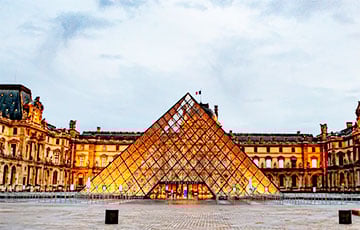
Museum thefts have become surprisingly common.
It took only seven minutes. Two masked robbers, using a ladder mounted on a truck, broke into the Apollo Gallery in the Louvre on the morning of October 19, broke the protective glass of two display cases and stole nine pieces of jewelry from the era of French Emperor Napoleon I Bonaparte and French monarchs. While fleeing on scooters with accomplices, they dropped one of the pieces of jewelry, writes The Economist (translated by Charter97.org).
The stolen eight pieces, described as "priceless," were part of a national collection of royal jewels. They include an emerald necklace and earrings given by Napoleon to his wife Marie-Louise as a wedding present in 1810, as well as Empress Eugenie's tiara, adorned with more than three thousand pearls and diamonds. French President Emmanuel Macron called the attack "an attack on French history."
Experts compared the theft to the legendary robbery of the Isabella Stewart Gardner Museum in Boston in 1990. "No one thought anyone would dare steal from the Louvre," says Dutch art theft expert Arthur Brand.
Similar daring heists are the second most common type of museum robbery in the world. Only less than half of the stolen objects are usually recovered.
French authorities are investigating how a truck was able to drive up to the Louvre undetected in central Paris. Justice Minister Gerald Darmanin said the incident "horribly tarnishes France's image." Auditors' reports said there were problems with updating the museum's security systems. Culture Minister Rachida Dati acknowledged, "This is the result of 40 years of neglect."

Bank's name: Bank Millennium S.A.
Address: ul. Stanislawa Zaryna, 2A, 02-593, Warszawa
IBAN: PL97116022020000000216711123
SWIFT: BIGBPLPW
Name of the account holder: Fundacja “KARTA ‘97”
Purpose/title of payment: Donation for statuary aims
You can contact us by the e-mail [email protected]