
Vladimir Fesenko: Negotiations May Begin After September 20
2- 9.09.2026, 11:30
- 21,348
Has the Kremlin backed down in the negotiations?
Russian President Putin met with special envoys from the U.S. president Steve Whitcroft and Jared Kushner, even though Putin’s press secretary Peskov had previously stated that the Kremlin would return to negotiations if Kyiv withdrew its troops from Donbas.
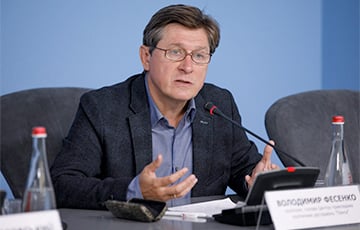
Why did Moscow decide to return to the negotiations? The website Charter97.org discussed this and other issues with renowned Ukrainian political scientist and head of the “Penta” Center for Applied Political Studies Vladimir Fesenko:
— There is still no confirmation that negotiations in a trilateral format will resume. There are hints that this might happen after the Russian State Duma elections (the elections to the State Duma of the Russian Federation will take place on September 18, 19, and 20). I would like to emphasize that Whitcoff and Kushner are saying that Russia is ready to return to negotiations, but there isn’t even a specific date. This is very telling.
As for Putin’s statements that Russia will return to negotiations only if Ukraine takes certain actions, there have already been many such statements. But the meeting in the Kremlin demonstrated once again that it is very important for him to maintain the prospect of diplomatic contact and a special relationship with Donald Trump. This is the most important thing for Putin. He does not want to negotiate with Ukraine; he does not want to end the war. This is particularly evident in the statements made by Putin’s aide Yuri Ushakov following the meeting with the Americans in the Kremlin. So nothing has changed here. But Russia may return to negotiations in a trilateral format no earlier than September 20, and more likely later.
But only because it is important for Putin to maintain the prospect of a special relationship with the U.S. president. Trump is important to Putin, not negotiations with Kyiv.
— Last week, Indian Prime Minister Narendra Modi and Chinese President Xi Jinping commented on the negotiations. Are these important signals for Moscow?
— This plays a much smaller role than Putin’s need to resume contact and the prospects for negotiations with Trump. Many have spoken out in favor of ending the war—and not for the first time. What’s important is that the Indian leader said this publicly at a meeting with Putin, right to his face. Let me remind you that even earlier the President of Kazakhstan Kassym-Jomart Tokayev had done the same.
Turkish President Recep Tayyip Erdoğan also raised this issue at the same SCO summit. All of this is important. If more and more of Russia’s partners raise this issue, saying that the war must end, then sooner or later it will have an effect. Right now, it won’t influence Putin’s position. As for China, Xi Jinping didn’t say anything new. He stated that China is ready to support the negotiation process and play a constructive role in all conflicts. This isn’t just about Ukraine—it also covers Afghanistan and the Middle East. It’s an abstract position. Therefore, it has no impact on Putin at this time.
Trump, however, is significant for Putin. Therefore, the only factor that will, in one way or another, influence the revival of the negotiation process—especially in a trilateral format involving the U.S., Russia, and Ukraine—is Washington’s position.
— Representatives of the French president’s administration have reported that Putin is allegedly ready for negotiations after the State Duma elections. Should we expect any changes?
— Here, we need to understand one simple thing: ahead of the State Duma elections, the Kremlin is avoiding extremes. Note that Putin constantly denies that there will be a mobilization in Russia after the State Duma elections. And that’s understandable, because they don’t want to scare ordinary Russians with the risks of the war expanding, escalating, or of mass mobilization.
He understands that this would have a negative effect. So it’s better, let’s say, to keep the peace. On the other hand, he also knows that there is a “war faction” in Russia—not only in the corridors of power but also among the general public. There are supporters of war among the public as well. For them, Moscow needs to demonstrate a strong, tough stance: no negotiations, no concessions to Kyiv. Victory will be Russia’s, and so on. It is necessary to continue this tough, forceful propaganda stance.
Therefore, declaring readiness for elections under such conditions would contradict the propaganda line. The meeting with the Americans took place because it was important for communication with Trump. They definitely won’t start negotiations before the State Duma elections.
After the State Duma elections, I wouldn’t rule out the possibility of agreements to resume negotiations in a trilateral format. But resuming negotiations does not mean a willingness to reach an agreement. That’s the problem. And it’s highly likely that Putin has no intention of negotiating an end to the war. This is very evident. Putin once again believes (though, in my view, this is an illusion) that he will succeed in winning the war against Ukraine.

Bank's name: Bank Millennium S.A.
Address: ul. Stanislawa Zaryna, 2A, 02-593, Warszawa
IBAN: PL97116022020000000216711123
SWIFT: BIGBPLPW
Name of the account holder: Fundacja “KARTA ‘97”
Purpose/title of payment: Donation for statuary aims
You can contact us by the e-mail [email protected]