Lukashenko Did Not Expect Such A "surprise"
17- 28.10.2025, 12:34
- 32,690
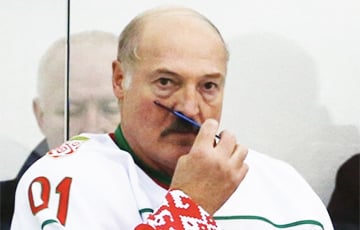
Russia no longer needs Belarusian goods.
Weak external demand continues to be a key problem for the Belarusian economy. The National Bank today released foreign trade data for January-August, and the main trends remain the same despite a slight reduction in the trade deficit in August, writes planbmedia.io.
The first news is bad. Waning demand in Russia and weak solvent demand where there are no sanctions against Belarus get their numerical confirmation. Exports of goods from Belarus totaled $3.379 billion in August, down 3.6% from July this year. By August last year, exports decreased by 2.6%. Over the eight months, exports of goods fell by 2.5% to $25.496 billion.
At the same time, imports fell by 7% against July to Br3.540 billion. In January-August, Belarus imported $28.701 billion worth of goods, which is 1.4% higher than last year's level.
As a result, the negative balance of foreign trade in goods for eight months reached $3.2 billion, beating the balance of last year by 48.4%. Over the month, the negative balance grew by $161.3 million.
The situation in foreign trade is traditionally exports of services. For eight months from grew by 15.4% to 7.286 billion dollars. Imports increased by 9.8% to $4.684 billion.
As a result, the negative balance of foreign trade in goods and services in January-August amounted to $602.8 million. For comparison: for the same period of 2024 it amounted to $111.7 million. Also with a minus sign. True, a month ago the number was even more frightening: $803.4 million minus.
The problem is in Russia
The problem with exports, which Lukashenko calls the main problem for the Belarusian economy, still has no solution. Even despite the growth of demand in some sectors and markets. As Beroc notes, the dynamics of demand in Russia has an uneven impact on Belarusian industries.
"Export-oriented food production continued to expand at a restrained pace against the backdrop of consumer activity in Russia, albeit reduced but still high. In turn, machine-building sectors reduced output amid a decline in the production of investment and intermediate goods by the Russian industry, as well as the extractive sector in Russia," reads the regular monitoring report.
In particular, the production of potash fertilizers was near peak volumes, and their exports may exceed 10 million tons by the end of the year.

Bank's name: Bank Millennium S.A.
Address: ul. Stanislawa Zaryna, 2A, 02-593, Warszawa
IBAN: PL97116022020000000216711123
SWIFT: BIGBPLPW
Name of the account holder: Fundacja “KARTA ‘97”
Purpose/title of payment: Donation for statuary aims
You can contact us by the e-mail [email protected]