What To Expect From Trump's Sanctions
- Petr Oleshchuk
- 27.10.2025, 12:09
- 9,826

The reaction of the world market followed instantly.
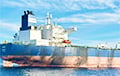
In the fall of 2025, U.S. President Donald Trump suddenly imposed tough sanctions against two major Russian oil companies Rosneft and Lukoil. The goal was labeled pressure on the Kremlin and forcing Moscow to end the war in Ukraine. The sanctions included freezing the companies' assets in the U.S., banning American companies and citizens from doing business with them, and threatening "secondary sanctions" on those foreign banks and buyers who would trade Russian oil. "Rosneft and Lukoil account for nearly half of all Russian oil exports. The reaction of the world market followed instantly. Already by the end of October after the announcement of sanctions, world oil prices jumped by about 5%, and the largest buyers of Russian energy carriers (primarily China and India) almost simultaneously suspended purchases.
The new sanctions noticeably paralyzed the main channels of Russian oil exports. Immediately after the restrictions were imposed, Chinese state-owned oil companies announced the suspension of purchases of Russian oil. In India, Reliance Industries, the largest private company, announced a large-scale adjustment or even a temporary halt in purchases of Russian oil. "Rosneft and Lukoil together produce about half of all exported crude. These companies together ship about 2 million barrels per day for export. The halt in purchases by Chinese and Indian buyers means a dramatic reduction in Russia's oil exports.
In the immediate aftermath of the sanctions announcement, markets plummeted. According to the Moscow Exchange, within two trading days, Rosneft's capitalization fell by 127 billion rubles (about $1.56 billion) and Lukoil's by 297 billion rubles (about $3.66 billion). Their shares fell by 3.0% and 7.2%, respectively. The fortunes of the owners of the securities also decreased. Thus, the founder of Lukoil Vagit Alekperov (owns 28% of shares) lost over a billion dollars in just a couple of days. In total, the Russian market lost about 424 billion rubles ($5.2 billion) of the capitalization of these two companies.
In addition to direct losses on the stock exchange, the companies have also increased their operating costs. Not only the parent structures of Rosneft and Lukoil, but also dozens of their foreign subsidiaries have fallen under the restrictions. This hampers their international trade. Foreign partners and banks are afraid to conduct transactions with Russian companies because of the risk of secondary sanctions.
Oil and gas traditionally form the foundation of Russia's budget revenues. According to Reuters calculations, Russia's oil and gas revenues for the third quarter of 2025 fell 21% year-on-year and provide about a quarter of the federal budget revenues. The Russian army still depends on oil as its main source of funds. A year ago, the budget plan was based on oil at $70 per barrel and envisioned a gradual decline in the role of oil rents (under the budget rule, the share of oil and gas revenues was to fall to 3.5% of GDP by 2028). However, new sanctions and attacks have hit this plan.
The US has thus struck a sanctions blow that will have serious consequences for Russia. These consequences could have been avoided if Putin and his entourage had agreed to a cease-fire, as the Trump administration has been pushing them to do for almost a year. But Putin has proven to be extremely intransigent and has rejected any of the Americans' most favorable terms. Trump offered him the de facto consolidation of the occupied territories of Ukraine, the lifting of sanctions and joint projects in the sphere of raw materials extraction, which should have become for Putin "an offer that cannot be refused."
But Putin refused. He simply does not think in terms of "benefits" or even "economics." His world is a world of imperial "greatness," annexation of land, wars of conquest, and what he himself calls "sovereignty." Behind which, in practice, lies unlimited power in the post-Soviet space, which he claims.
Petr Oleshchuk, Doctor of Political Sciences, Professor of Taras Shevchenko National University, specially for Charter97.org.

Bank's name: Bank Millennium S.A.
Address: ul. Stanislawa Zaryna, 2A, 02-593, Warszawa
IBAN: PL97116022020000000216711123
SWIFT: BIGBPLPW
Name of the account holder: Fundacja “KARTA ‘97”
Purpose/title of payment: Donation for statuary aims
You can contact us by the e-mail [email protected]