Lukashenko Is Against The Magistracy For The People
10- 23.10.2025, 20:23
- 9,218
But there is an exception.
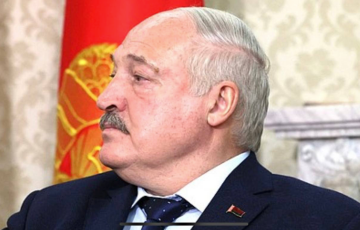
The history of Belarus' accession to the Bologna Process was rather short and not too happy. In 2010, Lukashenka instructed to start the process, and in 2015 it finally succeeded. And in 2022, Belarus and Russia were excluded from the Bologna Process. But the two-tier system of higher education, with bachelor's and master's degrees, remained. And it continues to irritate Lukashenko, writes planbmedia.io.
We don't need such education
Today during the meeting he again raised the issue of the functioning of the master's program.
"A few years ago we had a big talk with you on this topic and decided: no Bologna process, we have normal education," Lukashenko said.
He once again recalled how he was persuaded to train "all-round specialists" who would be in demand outside the country. "I remember this conversation. Are you going to train people for foreign countries in Belarusian universities?" - he was indignant.
The mutual recognition of diplomas, envisaged by the Bologna process, has obvious advantages. Even Lukashenko acknowledged that there are many foreigners studying in Belarus who would like to complete a master's degree. "Alright, let's do it that way. They pay money for everything, for the master's program. Come, study in the master's program including. As many years as you want. Your money, we train you. Go anywhere to work," he said.
With regard to the training of domestic specialists in the magistracy, Alexander Lukashenko reminded, it was decided that those who would later be engaged in science and teaching would become master students. "How are things now? I would like the Minister of Education to report here clearly and unambiguously."
What is the obstacle to the master's program?
The press service does not quote Ivants' words. However, recently, in an interview with the publication "Belaruski Chas," he told about what will happen to the master's and postgraduate studies in Belarus.
"Over a long enough period of time, the master's degree in the volume, in which it should have found itself on the labor market, has not been fully realized," said Ivanets, adding: "This does not mean that we should abandon it. Not at all."
What was the master's degree's fault? Ivanec believes it may have become a kind of barrier to entry into academia. "If talented and gifted young people want to do science, it is necessary to create conditions for them not only to come to the master's program, but also to graduate school without mandatory completion of the master's program. That is, to shorten their path to science, eliminating an artificial barrier."
Master's degree also hindered the renewal of university staff. "Currently, in order to teach at a university, a master's degree is required. We believe that if a young person is able to engage in teaching at a university, he or she can combine it with postgraduate studies. And this should be decided by the academic council of the university," Ivanets said.
So the master's degree was useful mainly for those planning to leave the country and foreign students, on whom Belarus has always been keen to make money.
It is interesting that Lukashenko's negative feelings towards the master's degree began even before 2020. Back in January 2019, he said that Belarus should not adopt Russia's experience in the field of master's degree training at universities.
"Make sure that in no case we do not borrow this experience, which Russia has adopted and now does not know what to do with it," he said.
Master's degree is for the chosen
Lukashenko's keen interest in a rather narrow topic is not accidental. Nikolai Lukashenko has completed three years of BSU under a bachelor's program in biotechnology and continues his studies. Alexander Lukashenko met with the rector of Peking University Gong Qihuang in the summer. They discussed the future of educational programs. At the same time, they signed an agreement on cooperation on the implementation of a joint educational master's program between Peking University and BSU.
Belarus is looking forward to deeper cooperation with China in education, according to Lukashenko's press service. Today, 11.5 thousand students from China study in Belarus. And in China - 1.5 thousand Belarusian students:
Beijing University is a key partner of BSU among Chinese educational institutions. From the 2022-2023 academic year, an experimental joint educational program for undergraduate studies in biotechnology has been launched, according to the state media. Lukashenko's youngest son Nikolai is studying there.
"I am very glad that we have launched a joint program of education in biotechnology. After completing the three-year program, the next stage is to establish a two-year more in-depth study of biotechnology," said the rector of Peking University.
Interestingly, Lukashenko's son has been receiving the so-called "presidential scholarship" since his first year. In 2023, he became the only freshman in the country honored with this payment. Maybe Kolya should be the only master's student, too?

Bank's name: Bank Millennium S.A.
Address: ul. Stanislawa Zaryna, 2A, 02-593, Warszawa
IBAN: PL97116022020000000216711123
SWIFT: BIGBPLPW
Name of the account holder: Fundacja “KARTA ‘97”
Purpose/title of payment: Donation for statuary aims
You can contact us by the e-mail [email protected]