Almost 40% Of Oil Refinery Capacity Has Been Shut Down In Russia
12- 1.10.2025, 7:46
- 16,568
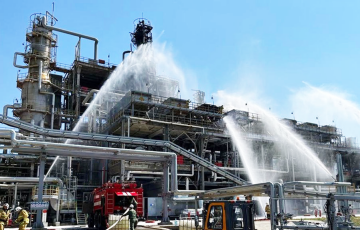
The scale of downtime has become historically unprecedented.
Ukrainian drone strikes that have hit more than two dozen major oil refineries in Russia since early August have plunged the Russian fuel market into a crisis it has never seen before.
As of September 28, refineries across the country were idling 38% of their primary refining capacity, or 338,000 tons per day, RBC citing data from quantitative information agency Siala.
The total amount of capacity available to produce gasoline and diesel fell by 6% in August and another 18% in September. The scale of refinery downtime was historically unprecedented: it exceeded the August record (23%, 206,000 tons per day), as well as the previous records of May-2022 (196,000 tons per day) and May-2020 (164,000 tons per day).
About 70% of the downtime, according to Siala's calculations, was the result of drone attacks: as of the end of September, they had knocked out about a quarter of Russia's oil refining, or about 236,000 tons per day, according to the agency's estimates.
In September, four more Russian refineries halted output after UAV raids. They include Kinef in the Leningrad Region, which has the second-largest capacity in Russia, and Rosneft's Ryazan refinery, which is among the top 5 largest. The first one shut down on September 14, the second one - on September 5. The Novokuibyshevsk refinery also stopped refining on September 20, and Gazprom's Astrakhan GPP stopped refining on September 22.
As a result, gasoline production in September fell by 1 million tons, and its deficit on the domestic market reached 20% of consumption, a source familiar with the situation told Kommersant. The fuel crisis has hit the Far East and the Crimea hardest, where since the beginning of the week it has been banned to sell more than 30 liters of gasoline per person. In total, more than 20 regions - from Sakhalin to the Nizhny Novgorod region - have faced fuel shortages.
Russian oil companies can do little to ease the crisis, economist Vladislav Inozemtsev notes: repairs to affected plants can take months, especially given the sanctions. They have banned the supply of Western equipment that was used to modernize Russian refineries in 2010s, and it is impossible to easily replace it with Chinese analogues, Inozemtsev explains.
To put out the fire on the gasoline market, the government has banned its export from the country, and prepared to start buying abroad - for this purpose, import duties on gasoline, diesel fuel and jet kerosene were abolished at the EAEU level. Most likely, the authorities will have to lower environmental standards in order for refineries to produce more fuel, according to Kommersant's source.
The gasoline crisis promises the Russian economy to accelerate inflation, warns Vladimir Chernov, an analyst at Freedom Finance Global. Wholesale fuel prices have jumped more than 40% since the beginning of the year, while retail prices are holding steady at 11-12% year-on-year growth and breaking records for the past 7 years. "Fuel prices inevitably raise costs in agriculture, transportation and logistics, translating into higher prices for food and essential goods," Chernov explains.

Bank's name: Bank Millennium S.A.
Address: ul. Stanislawa Zaryna, 2A, 02-593, Warszawa
IBAN: PL97116022020000000216711123
SWIFT: BIGBPLPW
Name of the account holder: Fundacja “KARTA ‘97”
Purpose/title of payment: Donation for statuary aims
You can contact us by the e-mail [email protected]